Showing posts with label Fiction. Show all posts
Showing posts with label Fiction. Show all posts
Thursday, January 13, 2011
Weeding Wuthering Heights
Working on paper books for RFID, came across a tattered paperback copy of Brontë's classic. In concurrence with my boss, we decided to weed this copy. And, I said to her, it occurred to me that that would make a wonderful title for a story: I weeded Wuthering Heights; or, perhaps, I thrashed Brontë. Now that I have the title(s), to write the story.

Wednesday, October 6, 2010
Israeli books
A patron came in today with hold requests for these books:
To the end of the land, David Grossman
The trials of Zion , Alan M. Dershowitz.
The rise of David Levinsky, Abraham Cahan
Bearing the body. Ehud Havazelet.
The Jewish Messiah. Arnon Grunberg.
Fire in the blood. Irène Némirovsky.
A pigeon and a boy / Meir Shalev.
When the grey beetles took over Baghdad / Mona Yahia.
To the end of the land, David Grossman
The trials of Zion , Alan M. Dershowitz.
The rise of David Levinsky, Abraham Cahan
Bearing the body. Ehud Havazelet.
The Jewish Messiah. Arnon Grunberg.
Fire in the blood. Irène Némirovsky.
A pigeon and a boy / Meir Shalev.
When the grey beetles took over Baghdad / Mona Yahia.
Saturday, July 10, 2010
A list of books
This quiet, gray afternoon, a patron came in with quite a list of books; most were out, but she did find a handful to take with her; the others I put on hold. Quite an interesting selection:
Zeitoun, Dave Eggers (2009).
A ticket to the circus: a memoir. Norris Church Mailer (2010).
The house at Riverton, Kate Morton (2009).
Hannah's list, Debbie Macomber (2010).
Bombay time, Thrity Umrigar (2001).
Day after night, Anita Diamant (2009).
Welcome to Utopia: notes from a small town, Karen Valby (2010).
The cleanest race: how North Koreans see themselves and why it matters, B.R. Myers.
Somewhere inside: one sister's captivity in North Korea and the other's fight to bring her home, Laura Ling and Lisa Ling (2010).
Zeitoun, Dave Eggers (2009).
A ticket to the circus: a memoir. Norris Church Mailer (2010).
The house at Riverton, Kate Morton (2009).
Hannah's list, Debbie Macomber (2010).
Bombay time, Thrity Umrigar (2001).
Day after night, Anita Diamant (2009).
Welcome to Utopia: notes from a small town, Karen Valby (2010).
The cleanest race: how North Koreans see themselves and why it matters, B.R. Myers.
Somewhere inside: one sister's captivity in North Korea and the other's fight to bring her home, Laura Ling and Lisa Ling (2010).
Thursday, May 20, 2010
Nella Larsen
Came across her name in reading biography of Federico García Lorca; when he was in New York, in 1929-30, he met Larsen.
In 1919, Larsen married Elmer Samuel Imes, a prominent physicist, the second African American to receive a Ph.D in physics. They moved to Harlem, where Larsen took a job at the 135th Street branch of the New York Public Library (NYPL). In the year after her marriage, she began to write and published her first pieces in 1920.
Well, I don't find an NYPL branch on 135th Street. There is the Arthur Schomburg Center for Research in Black Culture, which seems to be on 135th; and the Countee Cullen Library, which is at 104 West 136th Street (near Lenox Ave).
Certified in 1923 by the NYPL's library school, she transferred to a children's librarian's position in Manhattan's Lower East Side. In 1926, having made friends with important figures in the Negro Awakening that became the Harlem Renaissance, Larsen gave up her work as a librarian and began to work as a writer active in the literary community. In 1928, she published Quicksand (ISBN 0-14-118127-3), a largely autobiographical novel, which received significant critical acclaim, if not great financial success.
In 1919, Larsen married Elmer Samuel Imes, a prominent physicist, the second African American to receive a Ph.D in physics. They moved to Harlem, where Larsen took a job at the 135th Street branch of the New York Public Library (NYPL). In the year after her marriage, she began to write and published her first pieces in 1920.
Well, I don't find an NYPL branch on 135th Street. There is the Arthur Schomburg Center for Research in Black Culture, which seems to be on 135th; and the Countee Cullen Library, which is at 104 West 136th Street (near Lenox Ave).
Certified in 1923 by the NYPL's library school, she transferred to a children's librarian's position in Manhattan's Lower East Side. In 1926, having made friends with important figures in the Negro Awakening that became the Harlem Renaissance, Larsen gave up her work as a librarian and began to work as a writer active in the literary community. In 1928, she published Quicksand (ISBN 0-14-118127-3), a largely autobiographical novel, which received significant critical acclaim, if not great financial success.
Wednesday, March 24, 2010
Fiction Reading Increases for Adults
After years of bemoaning the decline of a literary culture in the United States, the National Endowment for the Arts says in a report that it now believes a quarter-century of precipitous decline in fiction reading has reversed.
The report, “Reading on the Rise: A New Chapter in American Literacy,” being released Monday, is based on data from “The Survey of Public Participation in the Arts” conducted by the United States Census Bureau in 2008. Among its chief findings is that for the first time since 1982, when the bureau began collecting such data, the proportion of adults 18 and older who said they had read at least one novel, short story, poem or play in the previous 12 months has risen. The news comes as the publishing industry struggles with declining sales amid a generally difficult economy.

The proportion of adults reading some kind of so-called literary work — just over half — is still not as high as it was in 1982 or 1992, and the proportion of adults reading poetry and drama continued to decline. Nevertheless the proportion of overall literary reading increased among virtually all age groups, ethnic and demographic categories since 2002. It increased most dramatically among 18-to-24-year-olds, who had previously shown the most significant declines.
“There has been a measurable cultural change in society’s commitment to literary reading,” said Dana Gioia, chairman of the National Endowment for the Arts. “In a cultural moment when we are hearing nothing but bad news, we have reassuring evidence that the dumbing down of our culture is not inevitable.”
Under Mr. Gioia’s leadership the endowment spearheaded “The Big Read,” a program in partnership with the Institute of Museum and Library Services and Arts Midwest to encourage communities to champion the reading of particular books, like “The Great Gatsby” by F. Scott Fitzgerald and “Their Eyes Were Watching God” by Zora Neale Hurston. The report is being released just over a week before Mr. Gioia steps down after six years as the endowment’s chairman.
Four years ago the endowment released the report “Reading at Risk,” which showed that fewer than half of Americans over 18 read novels, short stories, plays or poetry. That survey, based on data gathered in 2002, provoked a debate among academics, publishers and others about why reading was declining. Some argued that it wasn’t, criticizing the study for too narrowly defining reading by focusing on the literary side, and for not explicitly including reading that occurred online.
In each survey since 1982 the data did not differentiate between those who read several books a month and those who read only one poem. Nor did the surveys distinguish between those who read the complete works of Proust or Dickens and those who read one Nora Roberts novel or a single piece of fan fiction on the Internet.
Mr. Gioia said that Internet reading was included in the 2008 data, although the phrasing of the central question had not changed since 1982. But he said he did not think that more reading online was the primary reason for the increase in literary reading rates overall.
Instead he attributed the increase in literary reading to community-based programs like the “Big Read,” Oprah Winfrey’s book club, the huge popularity of book series like “Harry Potter” and Stephenie Meyer’s “Twilight,” as well as the individual efforts of teachers, librarians, parents and civic leaders to create “a buzz around literature that’s getting people to read more in whatever medium.”
This apparent reversal came a little more than a year after the endowment released an overwhelmingly pessimistic report in 2007 that linked a decline in reading-test scores to a fall in reading for fun among adolescents. That report also collected data showing that the proportion of adults who read regularly for pleasure had declined. At the time Mr. Gioia called the data “simple, consistent and alarming.”
Elizabeth Birr Moje, an education professor at the University of Michigan who specializes in literacy, language and culture, said it was impossible to do more than speculate why literary reading rates had increased in the most recent survey. The rise could just as easily be attributed to changes in health care or a need for escape in difficult economic times, she said.
What’s more, Ms. Moje added, it was an isolated piece of information. “It’s just a blip,” she said. “If you look at trend data, you will always see increases and decreases in people’s literate practices.”
Among ethnic groups the latest report found that the proportion of literary reading increased most for what the study classifies as Hispanic Americans, rising to 31.9 percent in 2008 for adults 18 and over, from 26.5 percent in 2002. The highest percentage of literary reading was among whites, at 55.7 percent, up from 51.4 percent in 2002. The rate of literary reading among men 18 and older increased to 41.9 percent in 2008, from 37.6 percent in 2002. The proportion also increased among women, to 58 percent in 2008, from 55.1 percent in 2002.
At the same time the survey found that the proportion of adults who said they had read any kind of a book, fiction or nonfiction, that was not required for work or school actually declined slightly since 2002, to 54.3 percent from 56.6 percent.
Mr. Gioia said that the decline in book reading might be attributable to a falloff in the reading of nonfiction, although he offered no explicit evidence of that.
Patricia Schroeder, president of the Association of American Publishers, suggested that some people might not count the reading they do online or even on electronic readers like the Kindle as “book” reading.
Jim Rettig, president of the American Library Association and university librarian at the University of Richmond, said that the 2008 data would not reflect a recent uptick in circulation at libraries. As the economy has soured, Mr. Rettig said, “people are discovering that you don’t have to spend anything to read a book if you have a library card.”
January 12, 2009
Fiction Reading Increases for Adults
By MOTOKO RICH
The Future of Reading: Literacy Debate: Online, R U Really Reading? (July 27, 2008)
Page Turner: A Good Mystery: Why We Read (November 25, 2007)
Study Links Drop in Test Scores to a Decline in Time Spent Reading (November 19, 2007)
'Reading on the Rise: A New Chapter in American Literacy' (National Endowment for the Arts) [pdf]
The report, “Reading on the Rise: A New Chapter in American Literacy,” being released Monday, is based on data from “The Survey of Public Participation in the Arts” conducted by the United States Census Bureau in 2008. Among its chief findings is that for the first time since 1982, when the bureau began collecting such data, the proportion of adults 18 and older who said they had read at least one novel, short story, poem or play in the previous 12 months has risen. The news comes as the publishing industry struggles with declining sales amid a generally difficult economy.

The proportion of adults reading some kind of so-called literary work — just over half — is still not as high as it was in 1982 or 1992, and the proportion of adults reading poetry and drama continued to decline. Nevertheless the proportion of overall literary reading increased among virtually all age groups, ethnic and demographic categories since 2002. It increased most dramatically among 18-to-24-year-olds, who had previously shown the most significant declines.
“There has been a measurable cultural change in society’s commitment to literary reading,” said Dana Gioia, chairman of the National Endowment for the Arts. “In a cultural moment when we are hearing nothing but bad news, we have reassuring evidence that the dumbing down of our culture is not inevitable.”
Under Mr. Gioia’s leadership the endowment spearheaded “The Big Read,” a program in partnership with the Institute of Museum and Library Services and Arts Midwest to encourage communities to champion the reading of particular books, like “The Great Gatsby” by F. Scott Fitzgerald and “Their Eyes Were Watching God” by Zora Neale Hurston. The report is being released just over a week before Mr. Gioia steps down after six years as the endowment’s chairman.
Four years ago the endowment released the report “Reading at Risk,” which showed that fewer than half of Americans over 18 read novels, short stories, plays or poetry. That survey, based on data gathered in 2002, provoked a debate among academics, publishers and others about why reading was declining. Some argued that it wasn’t, criticizing the study for too narrowly defining reading by focusing on the literary side, and for not explicitly including reading that occurred online.
In each survey since 1982 the data did not differentiate between those who read several books a month and those who read only one poem. Nor did the surveys distinguish between those who read the complete works of Proust or Dickens and those who read one Nora Roberts novel or a single piece of fan fiction on the Internet.
Mr. Gioia said that Internet reading was included in the 2008 data, although the phrasing of the central question had not changed since 1982. But he said he did not think that more reading online was the primary reason for the increase in literary reading rates overall.
Instead he attributed the increase in literary reading to community-based programs like the “Big Read,” Oprah Winfrey’s book club, the huge popularity of book series like “Harry Potter” and Stephenie Meyer’s “Twilight,” as well as the individual efforts of teachers, librarians, parents and civic leaders to create “a buzz around literature that’s getting people to read more in whatever medium.”
This apparent reversal came a little more than a year after the endowment released an overwhelmingly pessimistic report in 2007 that linked a decline in reading-test scores to a fall in reading for fun among adolescents. That report also collected data showing that the proportion of adults who read regularly for pleasure had declined. At the time Mr. Gioia called the data “simple, consistent and alarming.”
Elizabeth Birr Moje, an education professor at the University of Michigan who specializes in literacy, language and culture, said it was impossible to do more than speculate why literary reading rates had increased in the most recent survey. The rise could just as easily be attributed to changes in health care or a need for escape in difficult economic times, she said.
What’s more, Ms. Moje added, it was an isolated piece of information. “It’s just a blip,” she said. “If you look at trend data, you will always see increases and decreases in people’s literate practices.”
Among ethnic groups the latest report found that the proportion of literary reading increased most for what the study classifies as Hispanic Americans, rising to 31.9 percent in 2008 for adults 18 and over, from 26.5 percent in 2002. The highest percentage of literary reading was among whites, at 55.7 percent, up from 51.4 percent in 2002. The rate of literary reading among men 18 and older increased to 41.9 percent in 2008, from 37.6 percent in 2002. The proportion also increased among women, to 58 percent in 2008, from 55.1 percent in 2002.
At the same time the survey found that the proportion of adults who said they had read any kind of a book, fiction or nonfiction, that was not required for work or school actually declined slightly since 2002, to 54.3 percent from 56.6 percent.
Mr. Gioia said that the decline in book reading might be attributable to a falloff in the reading of nonfiction, although he offered no explicit evidence of that.
Patricia Schroeder, president of the Association of American Publishers, suggested that some people might not count the reading they do online or even on electronic readers like the Kindle as “book” reading.
Jim Rettig, president of the American Library Association and university librarian at the University of Richmond, said that the 2008 data would not reflect a recent uptick in circulation at libraries. As the economy has soured, Mr. Rettig said, “people are discovering that you don’t have to spend anything to read a book if you have a library card.”
January 12, 2009
Fiction Reading Increases for Adults
By MOTOKO RICH
The Future of Reading: Literacy Debate: Online, R U Really Reading? (July 27, 2008)
Page Turner: A Good Mystery: Why We Read (November 25, 2007)
Study Links Drop in Test Scores to a Decline in Time Spent Reading (November 19, 2007)
'Reading on the Rise: A New Chapter in American Literacy' (National Endowment for the Arts) [pdf]
Thursday, January 21, 2010
SIRO

Anna: "Ottoman history was my field, before I became a NOC."
"No shit," said Taylor.
"No shit."
"What sort of life crisis pushed you into the CIA? Too many overdue library books?"
Wednesday, August 12, 2009
Books on Drinking
A well-stocked library will include these books on the pleasures and hazards of drink, says Iain Gately
1. Under the Volcano. Malcolm Lowry. Penguin, 1947. FIC Lowry
Malcolm Lowry wrote of this novel: “The dream I cherished in my heart was to create a pioneer work . . . and to write at last an authentic drunkard’s story.” He succeeded—it is amusing, poignant and macabre. Lowry sobered up to write the book, which is set in a provincial Mexican town during its annual festival celebrating the dead. The story describes the last days of Geoffrey Firmin, a British diplomat who had been posted to this backwater so that he can kill himself, with mescal, discreetly. “Under the Volcano” offers vivid descriptions of what it feels like to be under the influence, including the dubious pleasure of vomiting in your neighbor’s garden and the shame of being incontinent and legless. Moreover, the novel shows great literary merit as Lowry plays with our sense of time, intercutting flashbacks and black-outs in stream-of-semiconsciousness. Above all, Lowry is a sympathetic observer of humanity, sober or not.
2. Prohibition. Andrew Sinclair. Little, Brown, 1962 973.9 S
I like my history dry. “Prohibition: The Era of Excess” documents, with an appropriate degree of cynicism, America’s flirtation with enforced sobriety. The champions of abstinence were frauds or megalomaniacs; the politicians they blackmailed to amend the Constitution without a vote were equally amoral; and the gangsters who profited from keeping Americans wet pushed the murder rate back to frontier-era levels. National Prohibition lasted from 1919 to 1932, encompassing the Roaring ’20s, the Great Depression and the birth of the modern age. The book is as much testament to the changes that occurred during that period as to the failure of the “noble experiment.” There is a supporting cast of fanatics, lunatics and thieves and final salvation via the intercession of a president promising a new deal. A master of his material, Andrew Sinclair also has an eye for pleasing ephemera, such as this bumper sticker from Michigan in 1929: “Don’t shoot—I’m not a bootlegger.”
3. Vintage. Hugh Johnson. Simon & Schuster, 1989 641.2209 J
“Vintage” is an excellent reference work on “the story of wine,” distinguished by its genial style and the evident affection of its author for his subject. In addition to charting how our passion for wine has influenced the ebb and flow of civilizations, the book is packed with esoterica, including the taste and price of Falernian red in ancient Pompeii and the menus of Parisian restaurants during the Franco-Prussian war (roast cat garlanded with rats, served with Bollinger champagne). Essential for anyone wishing to know how champagne got its fizz or how claret evolved from the generic name for a pink, sour fluid into the Premier Crus of Bordeaux.
4. Gin. Patrick Dillon. Charles Justin, 2003 363.41 D
In the early 1700s, London was the largest, most dissolute and most exciting city in Europe. People flocked to it from the provinces, inspired by the pantomime of Dick Whittington and his Cat and the rumor that its streets were paved with gold. The king, William of Orange, had come to power in the Glorious Revolution, after sailing over from Holland, the “home of spirits.” He owed his throne to a cabal of landowners and merchants who were suffering from a fall in the price of grain, and he placated them by giving anyone in England the right to distill gin, or Geneva, as it was called, in an approximation of the Dutch word for the juniper berries used as flavoring. Demand soared for grain and gin, which was distilled in basements and sold from shops, houses, the crypts of churches, boats, wheelbarrows and stalls at public executions. In “Gin,” Patrick Dillon sets the scene and details the fall-out of the West’s first spirits craze with charm and a degree of relish. For roughly half a century, until Parliament finally reined in the gin-distilling business, the death rate in London exceeded the birth rate. The city swarmed with “scandalous wretches” (as one Londoner put it) who “ran up and down the streets swearing, cursing and talking beastliness like so many devils” because of “this damn’d bewitching liquor.” While documenting the carnage, Dillon makes space for the sea change in public opinion that enabled Parliament to slay the monster it had created. The book is an outstanding example of how narrative nonfiction can bring an era and its concerns back to life.
5. Headlong Hall. Thomas Love Peacock. 1816. FIC Peacock
The Enlightenment collides with the squirearchy in this Regency novel set in a Welsh manor over Christmas. Guests argue over “Progress” or its absence, and their host, Harry Headlong, moderates their debates with claret, port, brandy and aqua vitae. There are skulls, explosions, landscaped gardens, the Peacock-coined word osseocarnisanguineoviscericartilaginonervomedullary (the bony fleshy bloody gutsy gristly marrowy totality of the body), a ball and later betrothals—all lubricated with lashings of booze. “Headlong Hall” is also a roman à clef featuring Samuel Taylor Coleridge and other Romantic poets, drawn from life. Best of all, it is an enthusiastic and stylish picture of the joys of commensal drinking.
—Mr. Gately is the author of “Drink: A Cultural History of Alcohol,” published in paperback by Gotham.
1. Under the Volcano. Malcolm Lowry. Penguin, 1947. FIC Lowry
Malcolm Lowry wrote of this novel: “The dream I cherished in my heart was to create a pioneer work . . . and to write at last an authentic drunkard’s story.” He succeeded—it is amusing, poignant and macabre. Lowry sobered up to write the book, which is set in a provincial Mexican town during its annual festival celebrating the dead. The story describes the last days of Geoffrey Firmin, a British diplomat who had been posted to this backwater so that he can kill himself, with mescal, discreetly. “Under the Volcano” offers vivid descriptions of what it feels like to be under the influence, including the dubious pleasure of vomiting in your neighbor’s garden and the shame of being incontinent and legless. Moreover, the novel shows great literary merit as Lowry plays with our sense of time, intercutting flashbacks and black-outs in stream-of-semiconsciousness. Above all, Lowry is a sympathetic observer of humanity, sober or not.
2. Prohibition. Andrew Sinclair. Little, Brown, 1962 973.9 S
I like my history dry. “Prohibition: The Era of Excess” documents, with an appropriate degree of cynicism, America’s flirtation with enforced sobriety. The champions of abstinence were frauds or megalomaniacs; the politicians they blackmailed to amend the Constitution without a vote were equally amoral; and the gangsters who profited from keeping Americans wet pushed the murder rate back to frontier-era levels. National Prohibition lasted from 1919 to 1932, encompassing the Roaring ’20s, the Great Depression and the birth of the modern age. The book is as much testament to the changes that occurred during that period as to the failure of the “noble experiment.” There is a supporting cast of fanatics, lunatics and thieves and final salvation via the intercession of a president promising a new deal. A master of his material, Andrew Sinclair also has an eye for pleasing ephemera, such as this bumper sticker from Michigan in 1929: “Don’t shoot—I’m not a bootlegger.”
3. Vintage. Hugh Johnson. Simon & Schuster, 1989 641.2209 J
“Vintage” is an excellent reference work on “the story of wine,” distinguished by its genial style and the evident affection of its author for his subject. In addition to charting how our passion for wine has influenced the ebb and flow of civilizations, the book is packed with esoterica, including the taste and price of Falernian red in ancient Pompeii and the menus of Parisian restaurants during the Franco-Prussian war (roast cat garlanded with rats, served with Bollinger champagne). Essential for anyone wishing to know how champagne got its fizz or how claret evolved from the generic name for a pink, sour fluid into the Premier Crus of Bordeaux.
4. Gin. Patrick Dillon. Charles Justin, 2003 363.41 D
In the early 1700s, London was the largest, most dissolute and most exciting city in Europe. People flocked to it from the provinces, inspired by the pantomime of Dick Whittington and his Cat and the rumor that its streets were paved with gold. The king, William of Orange, had come to power in the Glorious Revolution, after sailing over from Holland, the “home of spirits.” He owed his throne to a cabal of landowners and merchants who were suffering from a fall in the price of grain, and he placated them by giving anyone in England the right to distill gin, or Geneva, as it was called, in an approximation of the Dutch word for the juniper berries used as flavoring. Demand soared for grain and gin, which was distilled in basements and sold from shops, houses, the crypts of churches, boats, wheelbarrows and stalls at public executions. In “Gin,” Patrick Dillon sets the scene and details the fall-out of the West’s first spirits craze with charm and a degree of relish. For roughly half a century, until Parliament finally reined in the gin-distilling business, the death rate in London exceeded the birth rate. The city swarmed with “scandalous wretches” (as one Londoner put it) who “ran up and down the streets swearing, cursing and talking beastliness like so many devils” because of “this damn’d bewitching liquor.” While documenting the carnage, Dillon makes space for the sea change in public opinion that enabled Parliament to slay the monster it had created. The book is an outstanding example of how narrative nonfiction can bring an era and its concerns back to life.
5. Headlong Hall. Thomas Love Peacock. 1816. FIC Peacock
The Enlightenment collides with the squirearchy in this Regency novel set in a Welsh manor over Christmas. Guests argue over “Progress” or its absence, and their host, Harry Headlong, moderates their debates with claret, port, brandy and aqua vitae. There are skulls, explosions, landscaped gardens, the Peacock-coined word osseocarnisanguineoviscericartilaginonervomedullary (the bony fleshy bloody gutsy gristly marrowy totality of the body), a ball and later betrothals—all lubricated with lashings of booze. “Headlong Hall” is also a roman à clef featuring Samuel Taylor Coleridge and other Romantic poets, drawn from life. Best of all, it is an enthusiastic and stylish picture of the joys of commensal drinking.
—Mr. Gately is the author of “Drink: A Cultural History of Alcohol,” published in paperback by Gotham.
Wednesday, August 5, 2009
Hold that book
2 books, actually:
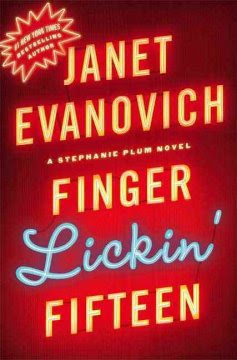 Evanovich, Janet. (2006). Finger lickin' fifteen. New York: St. Martin's Press.
231 holds on first copy returned of 263 copies
 Weiner, Jennifer.(2009). Best friends forever. New York : Atria Books.
548 holds on first copy returned of 172 copies
 Evanovich, Janet. (2006). Finger lickin' fifteen. New York: St. Martin's Press.
231 holds on first copy returned of 263 copies
 Weiner, Jennifer.(2009). Best friends forever. New York : Atria Books.
548 holds on first copy returned of 172 copies
Friday, June 19, 2009
A Literary Legend Fights for a Library
Ray Bradbury, the author, loves libraries and is helping to save them.
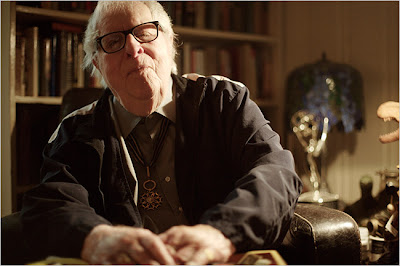
When you are pushing 90, have written scores of famous novels, short stories and screenplays, and have fulfilled the goal of taking a simulated ride to Mars, what’s left?
“Bo Derek is a really good friend of mine and I’d like to spend more time with her,” said Ray Bradbury, peering up from behind an old television tray in his living room.
An unlikely answer, but Mr. Bradbury, the science fiction writer, is very specific in his eccentric list of interests, and his pursuit of them in his advancing age and state of relative immobility.
This is a lucky thing for the Ventura County Public Libraries. Because among Mr. Bradbury’s passions, none burn quite as hot as his life-long passion for halls of books. His most famous novel, “Fahrenheit 451,” which concerns book burning, was written on a pay typewriter in the basement of the University of California, Los Angeles, library; his novel “Something Wicked This Way Comes” contains a seminal library scene.
Mr. Bradbury frequently speaks at libraries across the state, and on Saturday he will make his way here for a benefit for the H. P. Wright Library, which like many in the state’s public system is in danger of shutting its doors because of budget cuts.
One of the great ironies is that during the economic downturn more people than usually have turned to libraries for resources, for a haven, and for direction, and because of the same economic downturn, libraries are suffering budget cuts. and more.
“Libraries raised me,” Mr. Bradbury said. “I don’t believe in colleges and universities. I believe in libraries because most students don’t have any money. When I graduated from high school, it was during the Depression and we had no money. I couldn’t go to college, so I went to the library three days a week for 10 years.”
When he is not raising money for libraries, Mr. Bradbury still writes for a few hours every morning (“I can’t tell you,” is the answer to any questions on his latest book), reads Bernard Shaw, receives visitors including reporters, filmmakers, friends and children of friends, and watches films on his giant flat-screen television.
He can still be found regularly at the Los Angeles Public Library branch in Koreatown, which he visited often as a teenager. “The children ask me, How can I live forever too?” he said. “I tell them do what you love and love what you do. That’s the story on my life.”

When you are pushing 90, have written scores of famous novels, short stories and screenplays, and have fulfilled the goal of taking a simulated ride to Mars, what’s left?
“Bo Derek is a really good friend of mine and I’d like to spend more time with her,” said Ray Bradbury, peering up from behind an old television tray in his living room.
An unlikely answer, but Mr. Bradbury, the science fiction writer, is very specific in his eccentric list of interests, and his pursuit of them in his advancing age and state of relative immobility.
This is a lucky thing for the Ventura County Public Libraries. Because among Mr. Bradbury’s passions, none burn quite as hot as his life-long passion for halls of books. His most famous novel, “Fahrenheit 451,” which concerns book burning, was written on a pay typewriter in the basement of the University of California, Los Angeles, library; his novel “Something Wicked This Way Comes” contains a seminal library scene.
Mr. Bradbury frequently speaks at libraries across the state, and on Saturday he will make his way here for a benefit for the H. P. Wright Library, which like many in the state’s public system is in danger of shutting its doors because of budget cuts.
One of the great ironies is that during the economic downturn more people than usually have turned to libraries for resources, for a haven, and for direction, and because of the same economic downturn, libraries are suffering budget cuts. and more.
“Libraries raised me,” Mr. Bradbury said. “I don’t believe in colleges and universities. I believe in libraries because most students don’t have any money. When I graduated from high school, it was during the Depression and we had no money. I couldn’t go to college, so I went to the library three days a week for 10 years.”
When he is not raising money for libraries, Mr. Bradbury still writes for a few hours every morning (“I can’t tell you,” is the answer to any questions on his latest book), reads Bernard Shaw, receives visitors including reporters, filmmakers, friends and children of friends, and watches films on his giant flat-screen television.
He can still be found regularly at the Los Angeles Public Library branch in Koreatown, which he visited often as a teenager. “The children ask me, How can I live forever too?” he said. “I tell them do what you love and love what you do. That’s the story on my life.”
Thursday, June 18, 2009
But Always Meeting Ourselves
Sometimes one story can be enough for anyone: it suffices for a family, or a generation, or even a whole culture — but on occasion there are enormous holes in our histories, and we don’t know how to fill them.
I had brought an old copy of “Ulysses,” James Joyce’s masterpiece that takes place in the back streets of Dublin on June 16, 1904. I wanted to read it cover to cover. I have been dipping into the novel for many years, reading the accessible parts, plundering the icing on the cake, but in truth I had never read it all in one flow.
I've never gotten even that far.
The messy layers of human experience get pulled together, and sometimes ordered, by words.
The book carried me through to the far side of my body, made me alive in another time. I was 10 years old again, but this time I knew my grandfather, and it was a moment of gain: he was so much more than a forgotten drunk.
This is the function of books — we learn how to live even if we weren’t there. Fiction gives us access to a very real history. Stories are the best democracy we have. We are allowed to become the other we never dreamed we could be.
Colum McCannis the author of the forthcoming novel “Let the Great World Spin.”
I had brought an old copy of “Ulysses,” James Joyce’s masterpiece that takes place in the back streets of Dublin on June 16, 1904. I wanted to read it cover to cover. I have been dipping into the novel for many years, reading the accessible parts, plundering the icing on the cake, but in truth I had never read it all in one flow.
I've never gotten even that far.
The messy layers of human experience get pulled together, and sometimes ordered, by words.
The book carried me through to the far side of my body, made me alive in another time. I was 10 years old again, but this time I knew my grandfather, and it was a moment of gain: he was so much more than a forgotten drunk.
This is the function of books — we learn how to live even if we weren’t there. Fiction gives us access to a very real history. Stories are the best democracy we have. We are allowed to become the other we never dreamed we could be.
Colum McCannis the author of the forthcoming novel “Let the Great World Spin.”
Wednesday, June 17, 2009
Holden Caulfield, a Ripe 76
June 17, 2009
Holden Caulfield, a Ripe 76, Heads to Court Again
By A. G. SULZBERGER
The author J. D. Salinger, known as much for his cloistered ways as for his skillful pen, has sued repeatedly over the years to protect his privacy and the sanctity of his work.
So when a book that describes itself on its copyright page as “An Unauthorized Fictional Examination of the Relationship Between J. D. Salinger and his Most Famous Character” was published in Britain and scheduled for release in the Untied States, a detour to court was a safe bet.
“60 Years Later: Coming Through the Rye,” by J. D. California, a 33-year-old humor writer from Sweden who uses that gimmicky nom de plume, might be read as an update of sorts to Mr. Salinger’s 1951 classic, “The Catcher in the Rye,” which has sold more than 35 million copies. The new work centers on a 76-year-old “Mr. C,” the creation of a writer named Mr. Salinger. Although the name Holden Caulfield does not appear in the book, Mr. C is clearly Holden, one of the most enduring adolescent figures in American literature, as an old man.
Both novels are set in New York, feature the same characters and use similar language. Mr. Salinger’s work opens with the 16-year-old Holden’s departure from a boarding school; the new book begins with “Mr. C” leaving a retirement home. Both end on a carousel in Central Park.
In a complaint of copyright infringement filed in Federal District Court in Manhattan, where a hearing is scheduled for Wednesday, lawyers for Mr. Salinger call the new novel “a rip-off pure and simple.” Lawyers for Fredrik Colting, the new author, filed a brief this week saying that the work is more complex than just a sequel, noting that Mr. Salinger himself is a character.
The new book, the brief said, “explores the famously reclusive Salinger’s efforts to control both his own persona and the persona of the character he created.”
It adds: “In order to regain control over his own life, which is drawing to a close, ‘Mr. Salinger’ tries repeatedly to kill off Mr. C by various means: a runaway truck; falling construction debris; a lunatic woman with a knife; suicide by drowning and suicide by pills.”
The case is one of several in recent years exploring how much license the public has to draw on a classic work. In 2001 the estate of Margaret Mitchell, author of “Gone With the Wind,” sued unsuccessfully to prevent the release of “The Wind Done Gone,” which told the same story from the perspective of a slave. Last year J. K. Rowling, the author of the best-selling Harry Potter books, won a lawsuit over a guidebook to the series called The Harry Potter Lexicon.
“This case is really interesting because it really is where copyright runs into First Amendment rights, and it shows the jagged line between them,” said Jennifer Jenkins, director of the Center for the Study of the Public Domain at Duke Law School, who also was part of the legal team that defended the publisher in “The Wind Done Gone” lawsuit.
In examining questions of fair use of copyrighted work, courts have looked at whether a new work transforms the original in a significant way, Ms. Jenkins said, citing a Supreme Court ruling that a legitimate work must add “something new, with a further purpose or different character, altering the first with new expression, meaning or message.”
Mr. Colting, who is also the writer and publisher of lowbrow humor books for Nicotext, a Swedish company he started with a friend six years ago, said in a telephone interview that he never imagined that his book, which he described as his first attempt at serious fiction, might end up in court.
“In Sweden we don’t sue people,” he said.
Marcia Paul, a lawyer for Mr. Salinger, declined to comment on the case, citing her client’s desire for privacy. Court documents filed in the case describe Mr. Salinger, now 90, who lives in Cornish, N.H., as totally deaf, with “several age-related health problems,” including a recently broken hip that has put him in a rehabilitation facility. Mr. Salinger has not been photographed or granted an interview for decades.
Mr. Salinger will not attend the hearing, Ms. Paul said. Though he has not published any new work since 1965, he has sued several times to protect certain works, including successful efforts to stop publication of some of his personal letters in a biography and to halt a staging of “The Catcher in the Rye” by a college theater company in San Francisco. He has also turned down requests, from Steven Spielberg, among others, for movie adaptations of “The Catcher in the Rye.”
“He feels strongly that he wants his fiction and his characters to remain intact as he wrote them,” according to an affidavit by his literary agent.
Holden Caulfield, a Ripe 76, Heads to Court Again
By A. G. SULZBERGER
The author J. D. Salinger, known as much for his cloistered ways as for his skillful pen, has sued repeatedly over the years to protect his privacy and the sanctity of his work.
So when a book that describes itself on its copyright page as “An Unauthorized Fictional Examination of the Relationship Between J. D. Salinger and his Most Famous Character” was published in Britain and scheduled for release in the Untied States, a detour to court was a safe bet.
“60 Years Later: Coming Through the Rye,” by J. D. California, a 33-year-old humor writer from Sweden who uses that gimmicky nom de plume, might be read as an update of sorts to Mr. Salinger’s 1951 classic, “The Catcher in the Rye,” which has sold more than 35 million copies. The new work centers on a 76-year-old “Mr. C,” the creation of a writer named Mr. Salinger. Although the name Holden Caulfield does not appear in the book, Mr. C is clearly Holden, one of the most enduring adolescent figures in American literature, as an old man.
Both novels are set in New York, feature the same characters and use similar language. Mr. Salinger’s work opens with the 16-year-old Holden’s departure from a boarding school; the new book begins with “Mr. C” leaving a retirement home. Both end on a carousel in Central Park.
In a complaint of copyright infringement filed in Federal District Court in Manhattan, where a hearing is scheduled for Wednesday, lawyers for Mr. Salinger call the new novel “a rip-off pure and simple.” Lawyers for Fredrik Colting, the new author, filed a brief this week saying that the work is more complex than just a sequel, noting that Mr. Salinger himself is a character.
The new book, the brief said, “explores the famously reclusive Salinger’s efforts to control both his own persona and the persona of the character he created.”
It adds: “In order to regain control over his own life, which is drawing to a close, ‘Mr. Salinger’ tries repeatedly to kill off Mr. C by various means: a runaway truck; falling construction debris; a lunatic woman with a knife; suicide by drowning and suicide by pills.”
The case is one of several in recent years exploring how much license the public has to draw on a classic work. In 2001 the estate of Margaret Mitchell, author of “Gone With the Wind,” sued unsuccessfully to prevent the release of “The Wind Done Gone,” which told the same story from the perspective of a slave. Last year J. K. Rowling, the author of the best-selling Harry Potter books, won a lawsuit over a guidebook to the series called The Harry Potter Lexicon.
“This case is really interesting because it really is where copyright runs into First Amendment rights, and it shows the jagged line between them,” said Jennifer Jenkins, director of the Center for the Study of the Public Domain at Duke Law School, who also was part of the legal team that defended the publisher in “The Wind Done Gone” lawsuit.
In examining questions of fair use of copyrighted work, courts have looked at whether a new work transforms the original in a significant way, Ms. Jenkins said, citing a Supreme Court ruling that a legitimate work must add “something new, with a further purpose or different character, altering the first with new expression, meaning or message.”
Mr. Colting, who is also the writer and publisher of lowbrow humor books for Nicotext, a Swedish company he started with a friend six years ago, said in a telephone interview that he never imagined that his book, which he described as his first attempt at serious fiction, might end up in court.
“In Sweden we don’t sue people,” he said.
Marcia Paul, a lawyer for Mr. Salinger, declined to comment on the case, citing her client’s desire for privacy. Court documents filed in the case describe Mr. Salinger, now 90, who lives in Cornish, N.H., as totally deaf, with “several age-related health problems,” including a recently broken hip that has put him in a rehabilitation facility. Mr. Salinger has not been photographed or granted an interview for decades.
Mr. Salinger will not attend the hearing, Ms. Paul said. Though he has not published any new work since 1965, he has sued several times to protect certain works, including successful efforts to stop publication of some of his personal letters in a biography and to halt a staging of “The Catcher in the Rye” by a college theater company in San Francisco. He has also turned down requests, from Steven Spielberg, among others, for movie adaptations of “The Catcher in the Rye.”
“He feels strongly that he wants his fiction and his characters to remain intact as he wrote them,” according to an affidavit by his literary agent.
Popular fiction
First Family, David Baldacci: 541 holds on 348 copies
8th Confession, James Patterson: 594 holds on 405 copies
Matters of the Heart, Danielle Steel: 238 holds on 226 copies
And a call: "What happened to Farrah Fawcett?"
8th Confession, James Patterson: 594 holds on 405 copies
Matters of the Heart, Danielle Steel: 238 holds on 226 copies
And a call: "What happened to Farrah Fawcett?"
Wednesday, May 27, 2009
Hold that book
 David Baldacci's newest, First Family, has 630 holds on the first 333 copies. Now, that's a best-seller.
Not to be outdone, James Patterson's newest, 8th Confession, has 753 on the first 375 copies.
Subscribe to:
Posts (Atom)

