Thursday, January 22, 2009

Film: Kite Runner

Well done.

Names in film: Rostam and Sohrab.

Rostam (Persian: رستم, pronounced [ɾostæm],[ɾʊstæm]) is a mythical hero of Iran and son of Zal and Rudaba.

Sohrab or Suhrab (Persian: سهراب) was the son of Rostam, and Rostam was from Samangan who later married Thahamina daughter of Shah Kabul, "king of Kabul". In that time the ancient name of Afghanistan was Irna pronounce "err-na", Aryana. He fought Sohrab in Balkh, which is in Afghanistan.

Rostam

Wednesday, January 21, 2009

The Obama Generation

New York : Doubleday, 2009.


An interesting excerpt from what promises to be a good book. A couple of interesting phrases.

"I'd like Barack Obama to be president," Mr. Young said, to a burst of applause from a small hometown audience in 2007. But then he added: "In 2016." The applauders were caught up short. A few booed. At that point, Mr. Young was still supporting his old friend Hillary Clinton. Mr. Obama, he decided, wasn't even close to ready. "It's not a matter of being inexperienced," Mr. Young said in a matter-of-fact tone. "It's a matter of being young."

In 1968 he was 36. Being young didn't get in his way.

What Mr. Young exposed that night in Atlanta was a rift between black politicians born in the 1930s and 1940s and those born in the 1960s and 1970s. "I had a hard time believing the Obama phenomenon," he admitted a year later. The world view of the older politicians, many of them preachers like Mr. Young, was defined by limitation. They couldn't eat at lunch counters. They couldn't sit where they liked on buses or vote how and for whom they liked. They couldn't attend the schools they preferred or aspire to the jobs they believed they were qualified to hold. Every time one of those barriers fell, it was power seized, not given. They marched, they preached, and they protested.

Excellent point: Andrew Young had to fight for power; he couldn't understand that Obama didn't have to, in good part because of what he had done.

Another reason Mr. Obama had some trouble convincing black voters is because it had seldom been done this way before. Most black elected officials would never have been elected to office if they had to rely on white voters. Instead, they benefited from a civil-rights movement that created power through artfully drawn black majority districts. Once inside the circle, officials elected from these districts -- especially in Congress -- acquired a power of incumbency that virtually guaranteed re-election, year after year after year. The white political power structure, happy with separate but equal, generally looked the other way to protect their own politically safe preserves.

Separate but equal; a fascinating phrase.

Mr. Obama and other new generation politicians like him correctly saw the change coming. The most well-known black leaders had begun to age out. The big names -- Jesse Jackson Sr., Vernon Jordan and Colin Powell -- are in their sixties and seventies.

Joseph Lowery is 87. Martin would have been 80.

The Obama generation is, for the most part, in their thirties, forties, or at most fifties, with their own networks and ideas about the best way to seize power.

At most 50s; whew! I just make it.

With few exceptions, most younger black politicians around the country embraced Mr. Obama immediately as a kindred spirit. For the civil-rights icons, it was more complicated. Oakland, California Mayor Ron Dellums, 72, chose to support Mrs. Clinton over Mr. Obama, but even he acknowledged the shifting winds. Black leaders, he said, have got to stop treating change as a threat. "You have to update your analysis, update the nature of your politics," he says. "You can't be 1958, you can't be 1968, you have to be 2008, but you build on those realities."

Meanwhile, civil-rights luminaries like Roger Wilkins, a 76-year-old historian, journalist and veteran activists saw Mr. Obama's rise as a natural evolution. "I love this transition," he said, "because my generation has done its work. Whatever one thinks of the result of that work, it was consequential work, and it did help change the nation."

"But now we're old," he continued, "and there are people whose path we made possible who see the country very, very differently than we did."

Tuesday, January 20, 2009

A Reading List That Shaped a President

Mr. Obama tends to take a magpie approach to reading — ruminating upon writers’ ideas and picking and choosing those that flesh out his vision of the world or open promising new avenues of inquiry.

Sunday, January 18, 2009

Lincoln in the telegraph office

Read about him and his book in caption to picture in James McPherson's new book: Tried by war : Abraham Lincoln as commander in chief

Lincoln in the telegraph office : recollections of the United States Military Telegraph Corps during the Civil War / by David Homer Bates ; introduction to the Bison books edition by James A. Rawley

Lincoln : University of Nebraska Lincoln, c1995

Black Men Built The Capitol

Guilford, Conn. : Globe Pequot Press, c2007

Saw author on the telly.

Friday, January 16, 2009

Technology: 2008 in Review

#5 - Ebook readers
#4 - Clouds, clouds, everywhere
#3 - Microblogging
#2 - The Rise of the Netbook
#1 - iPhone 3G

A find

Eye disease gave great painters a different vision of their work, Stanford researcher says.

In searching for a poem about Monet having refused an operation on his eyes, I found this item. The poem is Monet Refuses the Operation, by Lisel Mueller.

Thursday, January 15, 2009

Folks Are Flocking to the Library, a Cozy Place to Look for a Job

HWPL certainly has been busier lately, the last few weeks, or so, compared to months ago. I can not know why.


Shamika Miller works on a computer at the Stockton-San Joaquin County Library in Tracy, Calif., a town that has been ravaged by mortgage foreclosures.


The financial crisis has caused a lot of withdrawals at the public library.

A few years ago, public libraries were being written off as goners. The Internet had made them irrelevant, the argument went. But libraries across the country are reporting jumps in attendance of as much as 65% over the past year, as newly unemployed people flock to branches to fill out résumés and scan ads for job listings.

Of course, the Internet itself is no replacement for actual research, not entirely. But I myself criticized the old model, and doing so got me in a lot of trouble In Library school.

Other recession-weary patrons are turning to libraries for cheap entertainment -- killing time with the free computers, video rentals and, of course, books.

Books, too, of course.


An average of 230 people a day line up to use the 27 computers at Randolph County Public Library in Asheboro, N.C.


A patron browses the science fiction and fantasy section of the Tracy library, which has seen an increase in the number of people using their materials.

Poe at 200 – Eerie After All These Years

Wednesday, January 14, 2009

Listening to Schroeder


Schroeder’s (and Schulz’s) Muse

“Peanuts”/United Feature Syndicate

Scholars have analyzed the scores played by the piano-mad Schroeder in “Peanuts” and have found real Beethoven, including the “Hammerklavier” Sonata.

Tuesday, January 13, 2009

Why Soldiers Fight -- or Flee


Heroes and Cowards
By Dora L. Costa & Matthew E. Kahn
(Princeton University Press, 315 pages, $27.95)

Monday, January 12, 2009

Willow Tree - film

Saw this film last weekend. Excellent. A man blind since age 8 is taken to Paris for a medical exam; a tumor is found behind an eye, and surgery strongly recommended to save his eye. Tumor turns out to be benign, and the surgeon finds that further surgery might restore his sight.

Indeed, it does. What happens, how the man reacts, is the essence of the film. A fascinating story, well acted. Seeing shots of Tehran was great. Iran turns out to look, well, normal. With all the stories of economic and political tensions, one never gets to see how it looks. This films gives that.

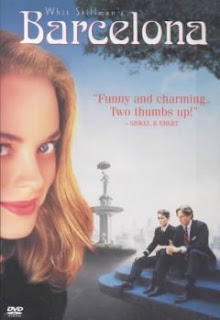
Barcelona

Saw Barcelona this weekend; found it to be virtually the same movie as Metropolitan. Okay; nothing great. Acting a bit wooden. Story moved along, slowly. Charming? Yeah, that.

Team of One

Presidential Command
By Peter W. Rodman
(Knopf, 351 pages, $27.95)

In a recent interview, Vice President Dick Cheney outlined his view of presidential power by noting that the American president is followed at all times by a military aide carrying the so-called nuclear football, which can be used to launch an immediate nuclear attack. "He could launch the kind of devastating attack the world has never seen," Mr. Cheney said. "He doesn't have to check with anybody. He doesn't have to call the Congress. He doesn't have to check with the courts. He has that authority because of the nature of the world we live in."

Quite a curious interpretation: the nature of our world allows the president to define his own constitutional power. More curious for a conservative to assert a reinterpretation of the constitution, and deny that conservative darling, "original intent."

Mr. Rodman's central argument is that presidents perform best when they are consistently engaged in matters of national security and when they empower subordinates to impose policy on the bureaucracies at State and the Pentagon. President Clinton's successes, for example, came when he gave clear direction and appointed a powerful envoy – George Mitchell for Northern Ireland and, eventually, Richard Holbrooke for Bosnia. President George W. Bush called himself the "decider," but Mr. Rodman argues that many of his foreign-policy failures – including the incoherence of his approach to North Korea or the absence of a workable plan for postwar Iraq – came in part from "a systematic failure to manage conflicts among his advisors."

Management is crucial. Obama has chosen potentially contentious, and certainly strong personalities for his cabinet. It will rest on his ability to manage to make his presidency work.

We don't know what Mr. Rodman would think of Mr. Obama's incoming national-security team. He didn't know that Hillary Clinton would be heading the State Department when he wrote that the "pivotal" figure is a "strong and loyal Secretary of State." And he wasn't writing about Mr. Obama when he warned: "The risk involved in the future is that a president who is not a master in foreign affairs may have a difficult time keeping an energetic secretary under control."

The loyalty of that equation will be a question to ponder over time.

Much has been made of Mr. Obama's Lincolnesque "team of rivals" approach to assembling his cabinet. Mr. Rodman's history lesson suggests that installing strong people to challenge the president can be a good thing -- if leadership ultimately comes from the top. Mr. Rodman offers the apocryphal story of Abraham Lincoln asking his cabinet to vote on whether to sign the Emancipation Proclamation. After all his cabinet secretaries voted "no," the story goes, Lincoln declared: "The ayes have it!"

In his remarks introducing various members of his cabinet, Obama stated that he is the one with the vision and the decision.

Saturday, January 10, 2009

Veeps

Veeps: Profiles in Insignificance. 973.099 K

Bill Kelter ; artist, Wayne Shellabarger. Marietta, Ga: Top Shelf ; London: Diamond, 2008.

The Dance Master With Kaleidoscope Eyes

Brothers in arms


Brothers in arms : the Kennedys, the Castros, and the politics of murder / Gus Russo and Stephen Molton.New York : Bloomsbury, 2008

Using breakthrough reporting and interviews with long-silent sources, investigative journalist Russo and coauthor Molton have crafted a dramatic retelling of the time before, during, and after the JFK assassination. The book centers on the two opposed sets of brothers--the Kennedys and the Castros--who collectively authored one of modern history's most dangerous, and tragically ironic, chapters. Bobby Kennedy pushed for the murder of Fidel Castro and instead got the death of his beloved brother, a psychic blow from which he himself never recovered. Lee Harvey Oswald killed an admired president and traumatized a nation, but in so doing may have prevented a third world war. Built on thirty years of intense research--including discoveries so significant that they have rekindled CIA and State Department interest in the Kennedy assassination--this book provides extraordinary new facts that will force a reconsideration of how and why the Kennedy murder came to pass.--From publisher description.

We Look Like the Enemy

We Look Like the Enemy : The Hidden Story of Israel's Jews from Arab Lands

Saw this book on new-book truck this morning.

Tuesday, January 6, 2009

You Never Know What You’ll Find in a Book

We may never fully understand what prompts people to leave unusual objects inside books. I speak of the slice of fried bacon that the novelist Reynolds Price once found nestled within the pages of a volume in the Duke University library. I speak of the letter that ran: “Do not write to me as Gail Edwards. They know me as Andrea Smith here,” which the playwright Mark O’Donnell found some years ago in a used paperback. I speak of any of those bizarre objects — scissors, a used Q-tip, a bullet, a baby’s tooth, drugs, pornography and 40 $1,000 bills — that have been discovered by the employees of secondhand bookstores, according to The Wall Street Journal and AbeBooks.com. Mystery surrounds these deposits like darkness.

I've never found anything quite that exotic; mostly, I've found notes, clippings, paper clips.

Sunday, January 4, 2009

Collaborative Artists


The Shameful Peace
By Frederic Spotts
Yale, 283 pages, $35

A shameful chapter in French history, in some cases the coexistence, in others the collaboration, with Nazis when they conquered and occupied France in June, 1940, is exemplified by this quote attributed to novelist Jean Giono: "I prefer being a living German to a dead Frenchman."

France has not gone through the process of examining its national and individual behaviors during WW2. The national myth is that of resistance, and even when facts clash against that mythology (as when it came out that Francois Mitterand himself had collaborated) the French manage to squirm out of examining their actions and behavior properly.


The La Place Blanche café (in 1940) across from the Moulin Rouge cabaret was reserved for the exclusive use of German soldiers during the occupation of Paris.

One would expect such things as the reserving of restaurants for soldiers of the occupying army.

After the collapse of the Third Republic in June 1940, armistice agreements signed at Compiègne parceled France into two halves more or less along an east-west axis. A supposedly independent (but collaborationist) French government headed by the aged Marshal Philippe Pétain was based in the spa town of Vichy, while Paris and its northern hinterland were placed under direct German military rule.

Why Hitler left half of a conquered land purportedly independent is a fascinating topic; I wonder if he did that with any other conquered nation.

The first effect of the armistice was to convert the French capital into a kind of vacation paradise for the German occupier. Nazi flags draped Garnier's opera house; German officers went on shopping sprees; some of the capital's leading hostesses vied for the privilege of entertaining the new authorities. Representatives of leading Nazi figures, notably Hermann Goering, sacked the homes of wealthy Jews for masterpieces of art – an expedition in which some of the city's grandest art dealers were pleased to assist.

Collaboration took different forms; punishing, and steraling from, Jews was obviously something some French were all too happy to do.

In defeated France, Hitler pursued two quite different objectives. One was to extract resources and manpower to wage war against Britain and later the Soviet Union; the other was to integrate France into a subordinate role within a European confederation ruled from Berlin. This was a complicated task that the Germans did not always pursue coherently, since the two objectives were often antagonistic – it is difficult to pretend, while pillaging a country, that it has even the slightest autonomy. One area where the Germans completely understood what they were about, however, was in the co-opting of the French cultural establishment.

France had long been the preeminent cultural force in Europe; conquering it broke that.

What made the French experience of German occupation so different from that of, say, Poland or Czechoslovakia or Greece was that Hitler, far from trying to eradicate French national culture, chose to nourish it as a distraction from his other demands. During the years of occupation the German authorities positively encouraged literature, theater and the arts – as long as Jews, Freemasons or (after June 1941) communists were excluded. The country was also subjected to an inundation of high German culture. German orchestras, musicians, artists and writers were constantly on furlough in the French capital. The German Institute in Paris became the center of cultural and social activities. And, it must be said, there was considerable traffic in the opposite direction, with French musicians, writers and artists making the pilgrimage to Berlin or other German cities.

Perhaps even Hitler was something of a Francophile.

German officers among the customers at the Café de la Paix on the Place de l'Opéra in late 1940.

Seeing this picture makes it difficult to deny that some French not just made do with the German occupation, but lived in it. Of course, not all did so. The French Resistance was very real.

After the Liberation in July 1944 there was, obviously, an attempt to settle scores, but in a haphazard fashion that left no one satisfied. The only writer tried and executed for his role during the occupation was Robert Brasillach. Drieu La Rochelle avoided that fate by committing suicide. Denoël was gunned down on the street. Cortot, Céline and Morand lay low outside France until things cooled down.

The need to nourish the myth of la France combattante – the cornerstone of Gaullist ideology – required far fewer collaborators than actually existed. The myth was also necessary to wrest the nimbus of Resistance from the communists, who claimed exclusive rights to it. Then, almost before anyone knew it, anti-Americanism became the ideology of choice for French intellectuals and artists, bringing both left and right happily together. Carefully and authoritatively written, "The Shameful Peace" peels back the pages of history and reminds us of events that many would still prefer to forget.