Showing posts with label Film. Show all posts

Saturday, October 30, 2010

I learned something today

A young woman came over to the Readers Advisory desk, looking for "a Romeo and Juliet film," but all she could tell me was that the actress had "blond hair" and the actor had "black hair." I tried to guess, and offered the film Leo DiCaprio made, but that wasn't it.
    She suggested I use Google Images, and when I did she recognized the cover of the DVD: Shakespeare in Love, with Gwyneth Paltrow and Joseph Fiennes


I learned something: image searching is indeed now possible to use as a librarian's tool to find requested material.

Monday, February 8, 2010

Who dat?

No, not the New Orleans Saints (who won the XLIVth Super Bowl yesterday, 31-17), whose fans made that phrase their motto.

Island Trees Library called, looking for the book Give us this day, written by Sydney Stewart. He was a survivor of the Bataan death march. His obit starts:

Sidney Stewart, a survivor of the Bataan death march and three years in Japanese captivity in World War II who wrote the highly praised memoir ''Give Us This Day,'' an account of how the prisoners endured their intense suffering, died on March 18 at a hospital in Paris. He was 78 and lived in Paris. The cause was complications from emphysema contracted by inhaling coral dust while laboring as a prisoner of war, said a colleague, Dr. Abby Adams-Silvan of New York.


Normally, having looked at the table of contents, I would have processed the book. But in checking the hold so I could fill out the correct routing slip, the patron's name caught my eye: Richard Conte. Not the Richard Conte who starred in House of Strangers (that I watched this past weekend) and as Barzini in The Godfather, but a namesake. Still.

Wednesday, August 12, 2009

Books and films asked for today

That old cape magic. Russo, Richard. 123 holds on first copy returned of 72 copies.

Bride wars [videorecording (DVD)]

Shanghai girls. See, Lisa.

Loving Frank. Horan, Nancy.

Stomp out loud [videorecording (DVD)] / a YES/NO Production.

Such sweet thunder; forty-nine pieces on jazz. : Balliett, Whitney.

Elsa & Fred
. Film from Spain.

Raising a child with soul. Jungreis-Wolff, Slovie.

The defector. Silva, Daniel. 599 holds, 213 copies; 26 more on order (18 by Hewlett)

Gertrude Lawrence as Mrs. A; an intimate biography of the great star. Aldrich, Richard Stoddard. no holds on 3 copies; an unusual request, saying the least.

Act like a lady, think like a man. Harvey, Steve. 39 holds on first copy returned of 118 copies

Rules of vengeance. Reich, Christopher.

Knowing [videorecording (DVD)]

Gran Torino [videorecording (DVD)]

Northanger Abbey. Austen, Jane.An unusual one; I have never heard of it.

Wednesday, August 5, 2009

Saturday, May 2, 2009

Shawshank library


King, Stephen. Different seasons. New York: Viking Press, 1982.

Contents: Rita Hayworth and Shawshank redemption
Apt pupil
The body
The breathing method.
Genre: Horror tales.


Th prison library is a central component of the movie plot.


Saturday, March 21, 2009

How is that spelled?


A patron asked for the movie Shine, which is out. Being about a pianist, he asked me to find another film about a piano. I entered paino instead of piano, and wound up with The Visitor (production designer, John Paino).

Thursday, February 26, 2009

It Happened Tomorrow

A regular patron, one of the group of senior guys, over at the Information Desk, asked if if I had tomorrow's lottery numbers. I said, "yes, but it'll cost you." He then told me about this film: he knew Dick Powell was in it, but couldn't remember the tile. So, I went to IMDb.com and searched through Dick Powell's credits, and found it.

Title: It Happened Tomorrow

Saturday, January 31, 2009

Film: The Sting


It still works, after all these years (1973). Fun.

Friday, January 30, 2009

Sahara


A Bogart film; pretty much what I expected: minimalist sets, gritty acting, a bit (nay, more) propaganda; fun.

Sunday, January 25, 2009

Ladri di biciclette

Bicycle Thiefs - Vittorio de Sica's 1948 film. A fascinating aspect of it is seeing how poor and devastated Italy was after WW2. In black and white, it has a stark feel, an almost desperate air at times, enhancing its impact. Early on there is a scene where the lead character, Antonio Ricci, leaves his bicycle to be watched by a kid, and the anticipation of its being stolen is palpable. As an aside, I mention that when Ricci returns the kid is nowhere to be seen, though the bicycle is still there.

Saturday, January 24, 2009

Funny Face


Always wonderful to hear Gershwin music. Yet this film tries my credulity: Astaire was 58 when the 1957 movie was released; Audrey Hepburn 28; they were paired romantically, a concept that really does not work all these many years later. 30 year difference; did it ever work? The music is good. Paris look great. Cliches abound: swans and white doves are merely the beginning; berets, smoky clubs, syrupy accents. Still, buy the premise, buy the film. If you analyze it, you ain't gonna enjoy it. Just suspend cynicism. It does work. Audrey Hepburn dancing bebop, beatnik dance; Astaire doing softshoe; they are wonderful. Kay Thompson, an actress I did not know, and an actress who made very few films (four?) does a really nice job.

Thursday, January 22, 2009

Film: The Earl of Chicago


It worked, barely; and beside learning that Robert Montgomery was not only a Republican but a friendly witness before witch-hunting anti-Communist committees, it's okay. Barely. Saw it on TCM.

Film: Kite Runner

Well done.

Names in film: Rostam and Sohrab.

Rostam (Persian: رستم, pronounced [ɾostæm],[ɾʊstæm]) is a mythical hero of Iran and son of Zal and Rudaba.

Sohrab or Suhrab (Persian: سهراب) was the son of Rostam, and Rostam was from Samangan who later married Thahamina daughter of Shah Kabul, "king of Kabul". In that time the ancient name of Afghanistan was Irna pronounce "err-na", Aryana. He fought Sohrab in Balkh, which is in Afghanistan.

Rostam

Monday, January 12, 2009

Willow Tree - film

Saw this film last weekend. Excellent. A man blind since age 8 is taken to Paris for a medical exam; a tumor is found behind an eye, and surgery strongly recommended to save his eye. Tumor turns out to be benign, and the surgeon finds that further surgery might restore his sight.

Indeed, it does. What happens, how the man reacts, is the essence of the film. A fascinating story, well acted. Seeing shots of Tehran was great. Iran turns out to look, well, normal. With all the stories of economic and political tensions, one never gets to see how it looks. This films gives that.

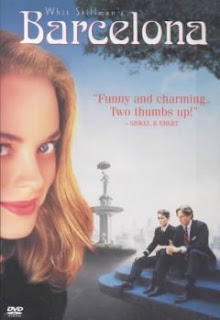
Barcelona

Saw Barcelona this weekend; found it to be virtually the same movie as Metropolitan. Okay; nothing great. Acting a bit wooden. Story moved along, slowly. Charming? Yeah, that.

Thursday, December 11, 2008

A Film Career Pulled Into Focus


Victor Fleming: An American Movie Master
By Michael Sragow - Pantheon, 645 pages, $40)

I am fortunate to have known a few people who were significant in Fleming's life, including pioneer picturemaker Allan Dwan, who essentially discovered Fleming and brought him into the movie business around 1915. A perfect example of the devil-may-care, anything-goes, haphazard quality of the early movie business is Dwan's description of meeting Fleming, quoted in the book from my 1960s interviews with Dwan.

Dwan explained that one day, while he was shooting in Santa Barbara, his car developed engine trouble. No one on the crew could fix it, but one of the actors told him that he had met a chauffeur in Montecito who knew more about cars than anyone. "So we drove around looking for this fellow," Dwan said, "and at one of these estates there was a tall young boy shooting a .22 -- with a Maxim silencer -- at a target in the garage." That was the guy, the actor said. They pulled the ailing car up behind the man with the rifle. It was Victor Fleming. Without even looking at them, he said: "One of your tappet valves is stuck."

In 1941, Fleming directed his version of "Dr. Jekyll and Mr. Hyde," one of five movies he made with Spencer Tracy, who delivered a tour-de-force performance, but it was a fateful project because Fleming worked for the first time with Ingrid Bergman and fell hopelessly in love with her. Both were married when they became lovers, a romantic saga that is especially affecting and beautifully rendered in Mr. Sragow's account, aided by quotations from Fleming's heartbreaking letters. In one note to Bergman, Fleming said he wanted "to tell you boldly like a lover that I love you -- cry across the miles and hours of darkness that I love you -- that you flood across my mind like waves across the sand."


Wow.

The portrait of Fleming in Mr. Sragow's telling is that of an engaging, complex and endearing person. Whatever one may think of his uneven record as a director, the human being behind the films emerges as someone you would like to have known and clearly would have liked a lot, as Mr. Sragow obviously does. What more could you want from a biography than for it to make the dead come alive again?

Wednesday, December 10, 2008

Linking subjects

A colleague talked of research she did for the musical term falling fifths. She showed me three examples of composition that have falling fifths: Beethoven's 9th Symphony, Schumann's string quartet No. 3. Opus 41, and Ned Rorem's War Scenes (Dewey call number Q 784.3061 R).

Having never heard of Rorem, I looked at War Scenes: Rorem set music to Walt Whitman's US Civil War diary, Specimen Days (Q 811 W). Rorem wrote it in protest against the Viet Nam War. A habitual and long-time diarist himself, Rorem has published much. One of those books is A Ned Rorem Reader ([Music] 780.92 Rorem); in it I read part of an essay he wrote on The Beatles. In that essay he made reference to two movies: Express Bongo (Port Washington Library owns the 1959 film on VHS), and Privilege (Hewlett Woodmere owns a new DVD release of the 1967 film).

Thus are subjects hyperlinked in the library. What a way to learn.


Falling fifths are discussed in various articles in IIMP, the International Index of Music Periodicals. But, what are they? A website defines: "in musical terms, a Falling Fifth is a chord progression that goes down “a fifth,” like from a G chord to a C chord (count G, F, E, D, C = 5). When writing music, a falling fifth progression is always acceptable (along with a falling second and a rising third), and if you continue progressing in falling fifths, you’re following the Circle of Fifths."

The website happens to be written by a librarian. Awright!